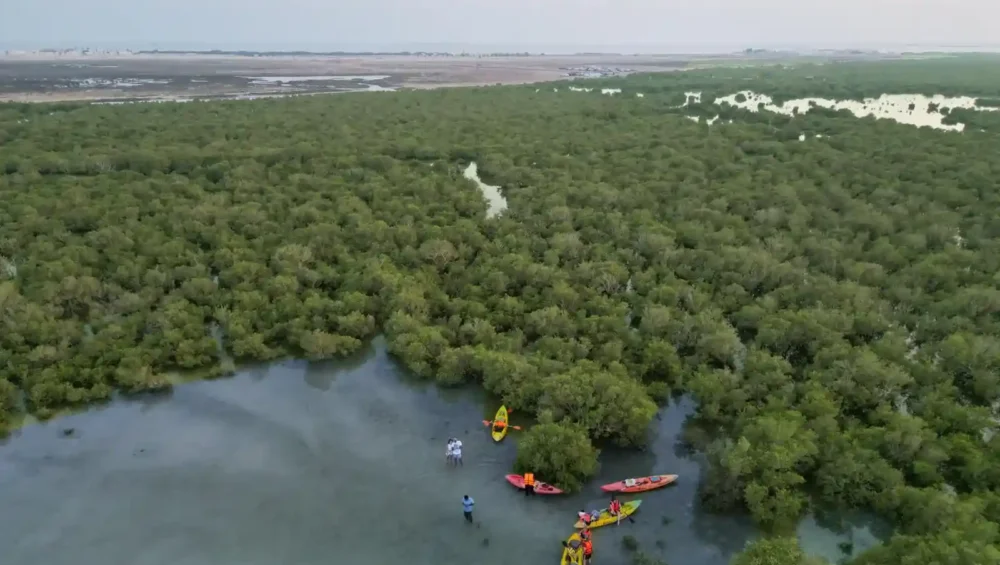
The Al Thakhira Mangrove is the heart of Qatar’s mangrove coast. It sits on the north-east shoreline near Al Khor, roughly an hour’s drive from Doha, and holds more than half of all the mangroves in the country. For a desert nation, it is a surprising stretch of green: calm tidal channels, salt-tolerant trees and a steady flow of birds, crabs and fish.
This guide explains what mangroves are, where they grow in Qatar, why the Al Thakhira Mangrove matters, what wildlife you can see and how to visit the area responsibly, whether you come to look, learn or paddle.
Quick Facts: Mangroves in Qatar
| Fact | Detail |
|---|---|
| Mangrove species in Qatar | One native species: the grey mangrove, Avicennia marina |
| Total mangrove area | About 14 km² (Ministry of Environment and Climate Change, July 2026) |
| Share inside Al Thakhira Reserve | Over 7 km², more than half of the national total |
| Location | North-east coast, about 64 km from Doha and 17 km north-east of Al Khor city |
| Protected status | Natural reserve since 2006 |
| Best way to explore | By kayak along the channels, not on foot inside the forest |
What Are Mangroves?
Mangroves are evergreen trees and shrubs that grow in the intertidal zone, the strip of coast that is covered by seawater at high tide and exposed at low tide. Very few trees can live with their roots in salty water, which makes mangroves a rare and valuable habitat in the Gulf.
Qatar has a single native mangrove species, the grey mangrove (Avicennia marina). It is one of the most heat- and salt-tolerant mangroves in the world. Its most recognisable feature is the field of pencil-like breathing roots, called pneumatophores, that poke up through the mud around each tree. At low tide you can see them clearly; at high tide they disappear under the water.
Compared with tropical mangrove jungles, Qatar’s mangroves are lower and more open. They grow slowly in very salty water and intense summer heat, which is exactly why scientists value them as a resilient, arid-region ecosystem.
Where Are Mangroves Found in Qatar?
Most of Qatar’s natural mangroves grow on the north-east coast, where sheltered bays and creeks provide the calm, shallow water the trees need. The largest and oldest stands are around Al Thakhira and Al Khor.
According to the Ministry of Environment and Climate Change, mangroves now grow across several coastal areas, including:
- Al Khor and Al Thakhira
- Al Wakra and Mesaieed
- Al Alia Island
- Fuwairit and Al Ruwais
- Al Arish and Al Jamil
Many of these newer sites come from planting programmes. Qatar began planting mangroves in 1981, and the national mangrove area has grown over the past few years through planned restoration. The west coast, by contrast, has very few mangroves: the Gulf of Salwa is too salty for them to grow well.
Al Thakhira Mangrove Reserve: Qatar’s Mangrove Heartland
Al Thakhira (also spelled Al Thakira or Al Dhakira) is a protected nature reserve on Qatar’s north-east coast. It was designated a natural reserve in 2006 and is managed by the Ministry of Environment and Climate Change. Visit Qatar notes that the name translates to “ammunition” in English.
The reserve has two parts. The marine section includes natural mangroves and the small island of Um Far. The land section is made up of gravel plains, salt flats (sabkha) and shallow valleys. Qatar e-Nature describes it as almost the only place in the country where trees grow naturally.
What makes the Al Thakhira Mangrove special is scale. With more than half of Qatar’s mangrove cover inside one reserve, it is the country’s most important mangrove ecosystem and one of its oldest. Researchers from Qatar’s universities regularly study its trees, soils and carbon storage.
Al Thakhira and Purple Island
Purple Island, also called Jazirat Bin Ghanim or Al Khor Island, lies close to the Al Thakhira mangroves in the Al Khor area. Its edges are fringed with the same grey mangroves, and it is another known resting spot for flamingos.
The island takes its name from its history. Archaeologists have found remains of an ancient dye industry there, where purple dye was made from sea snails during the Kassite period. Many kayaking trips in the area combine the Al Thakhira mangrove channels with a visit to Purple Island. For history, walking tips and things to do on the island, read our Purple Island visitor guide.
Why Mangroves in Qatar Matter
Mangroves cover only a small part of Qatar’s coastline, but they do a lot of work for it.
- Coastal protection. Mangrove roots hold the shoreline together. The Ministry of Environment and Climate Change says they reduce erosion and soften the impact of waves, tidal surges and coastal storms.
- A nursery for marine life. The calm, shaded water between the roots shelters young fish, shrimp and crabs, including fish species that matter to Qatar’s fisheries.
- Carbon storage. Mangroves store carbon in their wood, roots and especially the mud beneath them. A study by Hamad bin Khalifa University found that arid-region mangroves like Qatar’s store less carbon than tropical forests, but their resilience makes them stable, long-term carbon sinks.
- Green in the desert. Mangroves are among the very few trees that grow naturally in Qatar, which gives them high value for biodiversity and for people who want to experience nature close to Doha.
Wildlife and Birdlife at the Al Thakhira Mangrove
The Al Thakhira Mangrove attracts birds, fish and crustaceans all year. Visit Qatar lists herons, egrets, terns, gulls, cormorants and waders among the birds you may see, along with seasonal visitors such as geese, mallards and teal.
The stars of the cooler months are flamingos. According to Qatar Tourism, the greater flamingo can be spotted in Qatar from November to April, and ornithologists describe Al Thakhira as a favourite resting spot where flamingos wade through the shallow, salty water to feed.
Below the surface, look for crabs scuttling between the breathing roots, small fish darting through the channels and snails clinging to the trunks. A marine scientist at Qatar University told CNN that more than 30 fish species have been recorded in these mangroves, along with several types of crabs and shrimp.
Mangroves and Kayaking in Qatar
A kayak is the best way to see the Al Thakhira Mangrove up close. Visit Qatar advises visitors never to walk inside the forest, because footsteps damage the fragile roots. On the water, you glide quietly along the channels, close enough to watch birds and crabs without disturbing the trees.
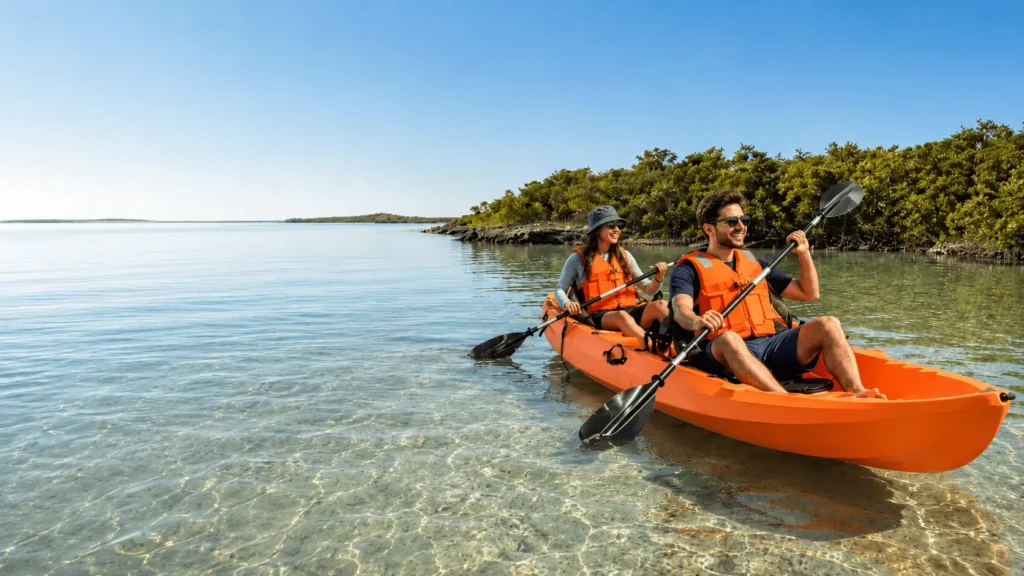
The tide shapes every trip. At high tide, water fills the narrow channels and opens routes deeper into the mangroves. At low tide, the channels become shallow and the breathing roots appear above the mud. This is why guided operators plan their schedules around the tide rather than fixed clock times. Discover Arabia, for example, chooses group dates for mangrove kayaking at Al Thakhira by checking the tide tables in advance.
No previous experience is needed for a guided trip in calm water. For a full step-by-step look at your first paddle, what happens on the day and how to choose between sessions, read our beginner’s guide to kayaking in Qatar.
Because the mangroves sit only about an hour north of the city, mangrove kayaking in Qatar is one of the easiest nature trips for anyone looking for kayaking near Doha. Most tours launch from camps in the Al Khor area, so a single Al Thakhira kayaking tour can cover both the main mangrove channels and Purple Island kayaking in one outing.
Kayaking in Al Thakhira: What to Expect on a Guided Tour
If you book kayaking in Al Thakhira with Discover Arabia, this is what the tour page currently lists:
| Detail | What the tour page states |
|---|---|
| Duration | About 3–4 hours |
| Route | Al Thakhira mangrove channels and a guided visit to Purple Island |
| Included | English-speaking guide, kayak, paddles and life jacket, safety briefing and basic paddling training, bottled water, tea and coffee |
| Minimum age | 2 years |
| Group size | Up to 40 participants |
| Price | QAR 180 per adult, QAR 75 per child (check the booking page for current prices) |
| Hotel pickup | Optional, QAR 150 round trip for up to 6 people |
| Not included | Meals or snacks, photography services |

Guests who drive themselves can park at the Al Thakhira kayaking camp, and you are welcome to bring your own food to enjoy at the camp after paddling.
Looking for a mangroves Qatar offer? Guided tour prices are QAR 180 per adult and QAR 75 per child, and schools can ask about group discounts on WhatsApp at +974 7770 6906. Seasonal deals change during the year, so check the mangrove kayaking booking page for the latest offer before you book.
Visiting the Al Thakhira Mangrove with Kids and School Groups
The Al Thakhira Mangrove is one of the best outdoor classrooms in Qatar. Children can see a living ecosystem up close, learn why salt-tolerant trees matter in a desert country and spot birds and crabs in their natural habitat.
Guided kayaking suits families because the channels are calm and the pace is relaxed. Discover Arabia’s mangrove kayaking tour accepts children from 2 years old, with life jackets and a safety briefing for everyone in the group.
Schools can go further with dedicated programmes at the Al Thakhira Mangrove, including school kayaking, the mangrove planting programme and a coastal clean-up campaign. These trips combine time on the water with hands-on conservation, so students leave knowing how to protect the mangroves, not just how to visit them.
Make a Day of It Around the Al Thakhira Mangrove
A trip to the Al Thakhira Mangrove fits easily into a full day in the north of Qatar.
- Al Thakhira Beach: Visit Qatar describes the beach as popular with families for swimming, sunbathing and picnics, with views of the mangrove forest.
- Purple Island: Combine your paddle with a short walk on the island and a look at its history.
- Al Khor: The nearby town has a seaside corniche and places to eat after your tour.
Plan your kayaking around the tide first, then fit the beach and Al Khor around it. That way you see the Al Thakhira Mangrove at its best and still enjoy a relaxed day out.
Tips for Photographing the Al Thakhira Mangrove
The Al Thakhira Mangrove is a favourite with photographers because the calm water reflects the green trees and the changing sky. Soft light just after sunrise and before sunset brings out the colours best. Keep your phone or camera in a waterproof pouch while paddling, use a wrist strap, and stay seated in the kayak when you take pictures. For birds such as flamingos and herons, a zoom lens lets you capture close-up shots without paddling too near and disturbing them.
How to Get to the Al Thakhira Mangrove from Doha
The Al Thakhira Mangrove is about 64 km north of Doha. Most visitors drive north on the main highway towards Al Khor, then continue north-east towards Al Thakhira. Qatar Tourism describes the mangroves as roughly a 45-minute drive from Doha; allow up to an hour depending on traffic and your starting point.
Public transport does not reach the shoreline, so you need a car, a taxi or a tour with pickup. If you are not driving, the optional hotel pickup on the booking page is the simplest choice.
Best Time to Visit the Al Thakhira Mangrove
- Season: The cooler months, roughly October to April, are the most comfortable for being outdoors. They also match flamingo season, from November to April.
- Time of day: Early morning and late afternoon are cooler and give softer light for photos. Discover Arabia runs dedicated sunrise kayaking and sunset kayaking sessions.
- Tide: More important than the clock. A higher tide means more channels to explore.
- Summer: Paddling is still possible, but plan for very early starts, plenty of water and strong sun protection.
For month-by-month weather across the country, see our guide to the best time to visit Qatar.
How to Protect the Mangroves When You Visit
The Ministry of Environment and Climate Change asks residents and visitors to help protect Qatar’s mangroves by not cutting or damaging the trees and not leaving waste in mangrove areas. A few simple habits make a big difference:
- Stay in the water channels; do not walk on the roots or inside the forest.
- Do not break branches, pull leaves or collect seedlings.
- Take all rubbish home, including food wrappers and bottles.
- Keep a respectful distance from birds, especially flamingos, and never feed wildlife.
- Paddle quietly and follow your guide’s route.
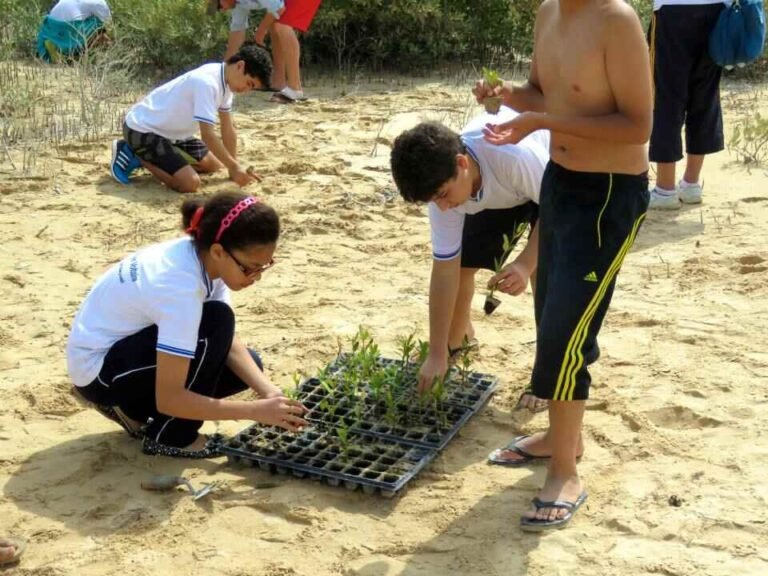
Qatar is actively restoring its mangroves. The ministry has run planting programmes since 1981, a national programme to conserve coastal ecosystems was launched in 2023 with Earthna and Qatar University, and new seedlings are produced every year. Schools and groups can take part through Discover Arabia’s mangrove planting programme.
Frequently Asked Questions
Where are the mangroves in Qatar?
Most of Qatar’s natural mangroves are on the north-east coast around Al Thakhira and Al Khor. Smaller or planted stands also grow at Al Wakra, Mesaieed, Al Alia Island, Fuwairit, Al Ruwais, Al Arish and Al Jamil.
How many mangrove species grow in Qatar?
One. The grey mangrove, Avicennia marina, is Qatar’s only native mangrove species.
How big is the Al Thakhira Mangrove?
The Ministry of Environment and Climate Change estimates that over 7 km² of mangroves lie within Al Thakhira Reserve, out of about 14 km² nationwide.
How far is the Al Thakhira Mangrove from Doha?
About 64 km north of Doha, usually a drive of 45 minutes to an hour.
Can you walk through the Al Thakhira Mangrove?
Walking inside the forest is discouraged because it damages the roots. Exploring by kayak along the channels is the recommended way to see them.
When can you see flamingos at the Al Thakhira Mangrove?
Greater flamingos are seen in Qatar from November to April, and Al Thakhira is one of their favourite resting spots.
Is Al Thakhira the same as Purple Island?
No. They are neighbouring areas near Al Khor. Purple Island (Jazirat Bin Ghanim) is a small island fringed with mangroves, and many kayaking tours visit both.
Do I need experience to kayak in the mangroves?
No. Guided tours include a safety briefing and basic paddling training, and the calm channels suit beginners and families.
Is there a mangroves Qatar offer for groups or schools?
Yes. Guided kayaking in Al Thakhira with Discover Arabia costs QAR 180 per adult and QAR 75 per child, and schools can request group discounts. Current offers are shown on the booking page.
What is included in a mangrove kayaking tour in Al Khor?
The Discover Arabia tour includes an English-speaking guide, kayak, paddles, life jacket, a safety briefing, a visit to Purple Island, and water, tea and coffee. Hotel pickup is available at extra cost.
Why are Qatar’s mangroves important?
They protect the coast from erosion and storms, shelter young fish, shrimp and crabs, store carbon and provide rare natural green space in a desert country.
Explore the Al Thakhira Mangrove with Discover Arabia
The Al Thakhira Mangrove shows a side of Qatar most visitors never expect: a living, green coastline shaped by tides and full of birds. The best way to experience it is slowly, from the water, with a guide who knows the channels.
Ready to see it for yourself? Book a guided kayaking in Al Thakhira tour with Discover Arabia, or message us on WhatsApp at +974 3023 3207 to ask about dates and tide times.